How to Strengthen Your Back for Holiday Heavy Lifting
By
[solidcore]
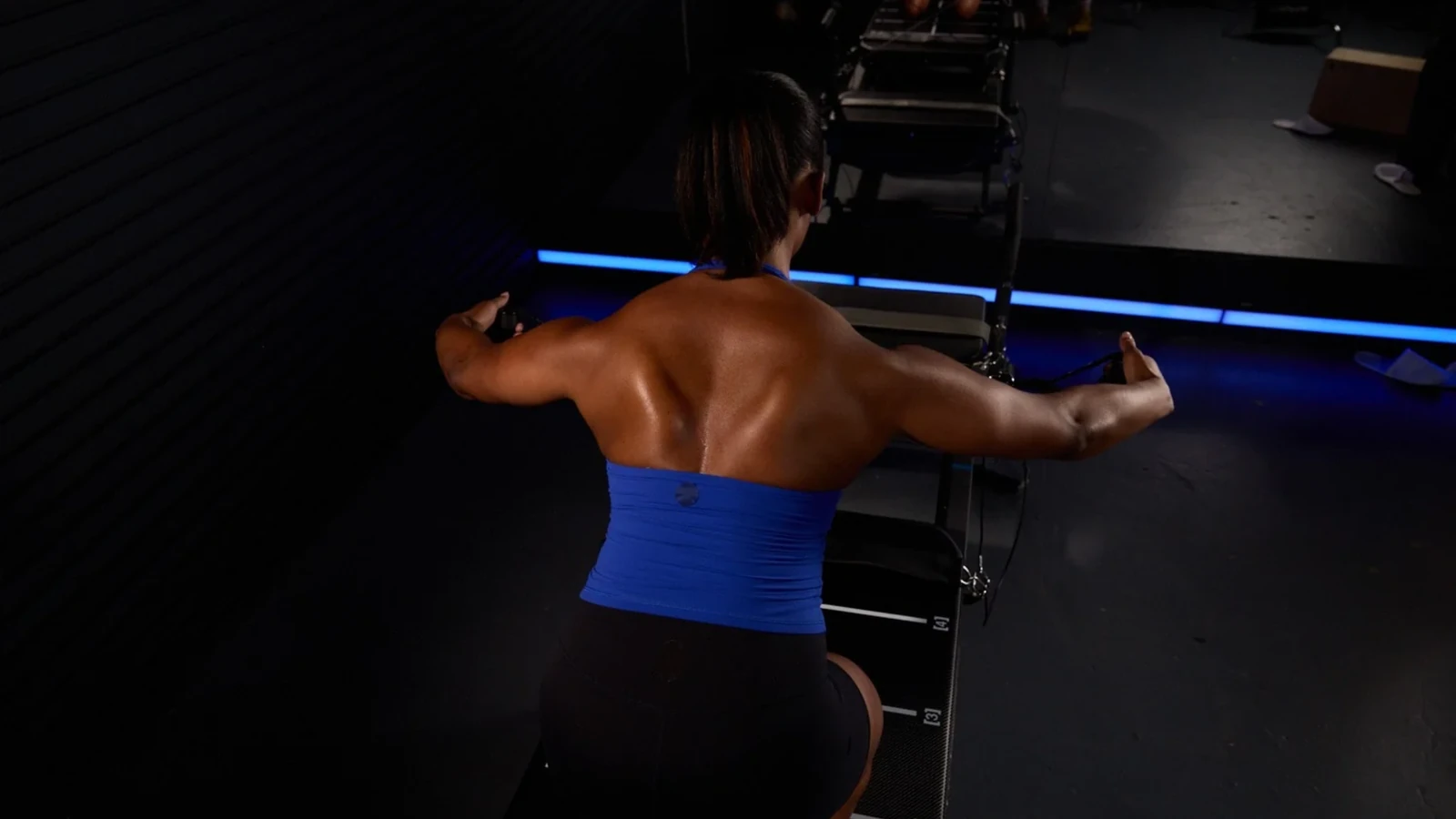

The holidays come with a lot of lifting. The tree goes up, the storage bins come down from the attic, and suitcases go into the overhead bin. Most of it happens in a rush, at odd angles, after a long day.
A strong back takes a team: your back, your deep core, your glutes, and your hamstrings. [solidcore] is high-intensity, low-impact strength training on a custom-built reformer. Every full-body class trains your core, and our muscle focus calendar rotates through your back, glutes, and hamstrings. Here's why [solidcore] builds the strength behind every holiday lift.
To strengthen your back for heavy lifting, train the muscles that work together every time you lift:
[solidcore] trains all of them, with dedicated back days on the muscle focus calendar and a center core block in every full-body class.
Holiday lifting rarely looks like a workout. The loads are awkward (a tree trunk, a car seat, a box with no handles), you're often reaching or twisting to get to them, and you're working in tight spaces like trunks, attics, and airplane aisles. It also tends to happen all at once: a season's worth of decorations in a single afternoon.
That's where position matters. When your lower back arches, the work shifts away from your abs and onto your hip flexors or spine. A long travel day adds to it, since prolonged sitting can pull your pelvis out of position, as our guide to tucking your tailbone explains. The muscles that keep you in position (your core, back, glutes, and hamstrings) are the ones [solidcore] trains.
Your back is your primary pulling muscle group. The latissimus dorsi (lats) handle shoulder extension and general back stabilization, and they're what you use to pull a load in and hold it close. The rhomboids pull your shoulder blades together, and the trapezius manages shoulder blade movement while supporting your neck and head. Carrying a heavy box against your chest? That's your back holding it in place. Read more in What Muscles Does [solidcore] Work?
The transverse abdominis is your deepest core muscle and the one most responsible for stabilizing your spine. When you brace before a lift, this is the muscle doing the bracing. In class, it's the muscle you switch on every time you tuck your tailbone.
Your glutes extend the hip, which is exactly what happens when you stand up holding something heavy. Your hamstrings work alongside them every time you bend to pick something up or climb stairs with your arms full. Here's why you shouldn't skip hamstring day.
A full-body [solidcore] class is built from four blocks: center core, obliques, lower body, and upper body. Each one trains a single muscle group to failure. Fail with us: it means you're getting stronger. Here's how each block connects to the lifting you'll do this season. (For timing and structure, see How a [solidcore] Class Is Built.)
New to [solidcore]? Find a studio near you.
Every full-body class includes a center core, which builds the stability that supports everything else you do in class. You'll hear your coach cue you to tuck your tailbone. That cue engages your transverse abdominis and keeps your lower back from arching, so the work stays in your abs instead of shifting to your hip flexors or spine. The same awareness can carry outside the studio, even when you're carrying your kids. More in The Best Workouts to Strengthen Your Core.
Every full-body class also includes obliques. Your internal obliques rotate your torso and help support your spine and posture through that rotation, the same motion you use to turn and set something down.
The lower body block trains one muscle group set by the muscle focus calendar, including hamstrings and glutes. Your hamstrings are recruited every time you bend over to pick something up, and your center glutes extend your hips. In class, your coach may cue you to hinge your hips back and down rather than letting your knees fall forward.
The arm wrap pairs biceps and triceps with either chest or back. Back exercises on the reformer include the seated low row, where you squeeze your shoulder blades together to bring your fists to your ribcage or hips; the seated upright row, where you contract your upper back and engage your lats to drive your elbows high and wide; and the kneeling rear delt press, which works your upper back and triceps. Your lats are the muscles that pull and hold loads in close to your body.
Back has dedicated days on our muscle focus calendar, which assigns one upper body and one lower body muscle group to each day. Back also appears in the arm wrap. The calendar is built to develop both sides of the body: front and back, push and pull. That balance trains the muscles holding everything up from behind, not just the ones you can see.
The December calendar has already dropped and it's programmed with Solidays in mind. Book your back days early.
A [solidcore] rep takes about eight seconds, four in each direction. That's time under tension: your muscles stay under load longer, and because the reformer carriage only moves as fast as you control it, momentum can't carry you through the hardest part of the movement.
It's also high-intensity and low-impact. There's no jumping, and no heavy barbell loading your spine. You build strength through slow, controlled movements instead, with a coach cueing your form throughout class.
Strength from class is half the equation. When it's time to lift, put it to use:
December asks a lot of your body. Join the Solidays Challenge and train for it: six or ten classes from December 3 through December 17, exclusively for [solidcore] members. More classes in December means more back days, more core work, and more strength for whatever the season asks you to carry.
Get ready with our guide to training for Solidays 2026, and keep up with stretching, hydration, and protein so your muscles can rebuild between classes.
New to [solidcore]? Start with our new client guide, then find a studio near you.
Strength is built over time. Start building yours before the boxes come down.
How do I strengthen my back for heavy lifting?
➜ Train the full chain of muscles that supports a lift: your back (lats, rhomboids, and trapezius), your deep core (transverse abdominis), and your glutes and hamstrings. A full-body [solidcore] class trains all of them, with a center core block, a lower body block, and dedicated back days on the muscle focus calendar.
Does [solidcore] work your back?
➜ Yes. Back is the primary pull muscle group, covering the latissimus dorsi, rhomboids, and trapezius. It gets dedicated days on the muscle focus calendar and appears in the arm wrap, with exercises like the seated low row, seated upright row, and kneeling rear delt press.
How does a [solidcore] class support lifting strength?
➜ Each full-body class has four blocks: center core, obliques, lower body, and upper body. The core block builds the stability you use to brace, the obliques support rotation, the lower body block trains the glutes and hamstrings that drive a lift, and the arm wrap trains the back muscles that hold a load close.
What muscles protect your back when lifting?
➜ No single muscle does it alone. Your transverse abdominis stabilizes your spine, your lats help hold the load close, and your glutes and hamstrings drive the lift so your lower back doesn't have to.
Is [solidcore] safe for your back?
➜ [solidcore] is high-intensity and low-impact, with slow, controlled movements and no jumping. Coaches cue form throughout class, including how to tuck your tailbone to engage your deep core.
What does "tuck your tailbone" mean?
➜ It means tilting your pelvis so your pubic bone tips up slightly, which engages your transverse abdominis and keeps your lower back from arching. It's one of the most common cues in class. Read the full guide: How to Tuck Your Tailbone.
How do you lift heavy boxes without hurting your back?
➜ Get close to the box, hinge at your hips and bend your knees, brace your core, and lift with your legs. Keep the box against your body, and turn with your feet instead of twisting. If it's too heavy, get help or split the load.




 Your Privacy Choices