

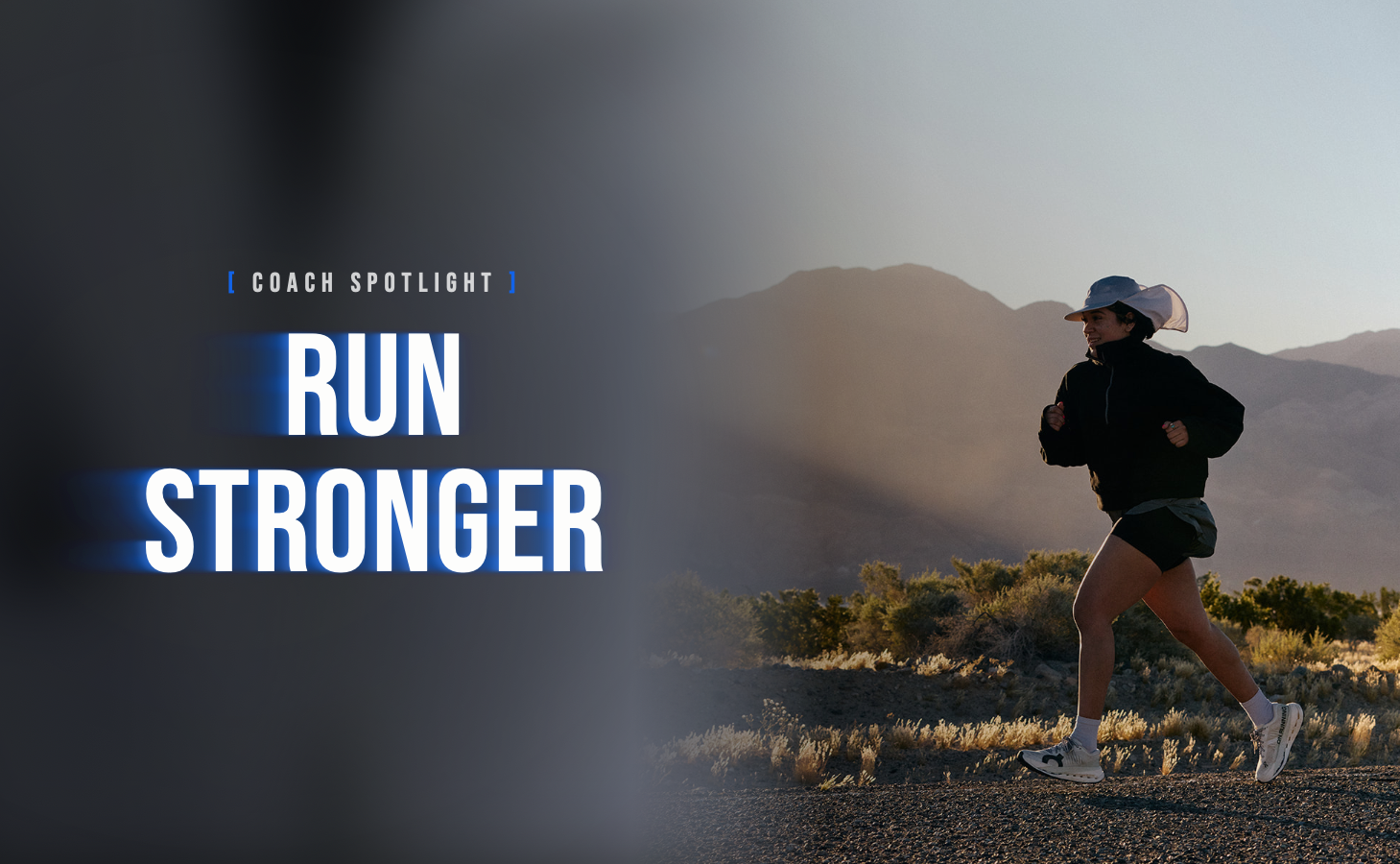

Why does running form fall apart late in a run? According to Nikki Rodriquez, it usually isn't your legs, it's your core. The [solidcore] West Loop Head Coach is deep into her marathon training cycle, logging five to six runs a week between coaching and taking classes, and the pattern she sees is consistent: runners with weak cores or unstable pelvises compensate by rotating their hips instead of driving their arms. Here's her case for why core stability is the foundation of good running mechanics, plus the one exercise she'd recommend every runner master.
New to [solidcore]? Start here.
"People often think running is all about your legs, but it's really a full-body sport. Your core and upper body play a huge role in how well you move."
The compensation pattern Nikki sees most often: when the core can't stabilize the pelvis, runners rotate their hips to generate momentum instead of driving their arms. That costs efficiency on every stride.
"At [solidcore], we're constantly teaching intentional core engagement and stability. Learning how to stabilize your core translates directly to better running mechanics."
"The biggest weakness is almost always core strength. When you're logging a lot of miles, it's easy to focus only on running and neglect everything else."
Nikki would also recommend strengthening the inner thighs and outer glutes. These muscles are essential for stability but rarely get direct attention in a running-only routine. [solidcore] targets both while emphasizing control and mobility, without adding extra impact on top of weekly mileage.
The single-leg squat.
"It builds outer glute strength while teaching you how to stabilize through your core and pelvis."
It is one move that helps both stability and strength which is why it's her answer every time.
Nikki's favorite core exercise for runners is a plank extension. This deep core exercise uses your transverse abdominis to challenge your stability. It's great for runners to learn how to brace their core while the rest of the body is active, one of the clearest examples of learning to brace your core while moving another part of your body.
"In class, we focus on keeping the hips stable, squeezing the glutes, and resisting rotation as the upper body moves. That's exactly what you're doing when you run. You want a stable core while your arms and legs move."
"There's a reason we always start with center core during warm-up. Every movement that follows depends on your ability to create core stability first."
Nikki started running about two years ago, when she signed up for her first half marathon right around the time she became a [solidcore] coach.
"I didn't know much about running, and my goal was to finish in under two hours. I reached that goal, but it was brutal. Looking back, I know I didn't train as consistently or intentionally as I could have."
Watching the Chicago Marathon later that year changed everything. Since then, she's built up to five to six runs a week while coaching full-time, and the two routines feed each other.
"There are mornings when I'll coach a 4:30 a.m. class and then head out for a long run afterward. Other days, I'll run to the studio, coach or take class, then finish the rest of my miles afterward."
One of Nikki's favorite projects has been partnering with the local Adidas representative in Chicago to host run clubs at the studio: a two-mile run before class, then everyone takes [solidcore] together. Adidas brings demo shoes so runners can try different models.
"It's been a really fun way to bring runners together and show how strength training and running can work hand in hand."
Want in on the next one? → Follow your local studio here!
Wildest run to date: In April, she ran with the Total Speed Project from Los Angeles to Las Vegas over two days, 460 miles as a team, switching off every half mile, roughly 50 miles each. "It was an amazing experience."
Currently on the playlist: "Go Back" by John Summit — "the beat helps me run faster."
Ready to build your own core stability? Find a studio near you.




 Your Privacy Choices